Bolt Tensioning Services in KSA for Critical Joints
When a joint is large, runs at high pressure or simply cannot leak, stretching the stud directly gives a more even load than turning the nut. Our crews bring hydraulic stud tensioners to plants across Saudi Arabia and load several studs at once, so the gasket compresses flat.
Taking thread friction out of the result
With a torque wrench, most of the effort goes into overcoming friction in the threads and under the nut, so the bolt load you get depends on lubricant and thread condition. A hydraulic tensioner works differently: it grips the end of the stud, stretches it a calculated amount, and the nut is then run down by hand to hold that stretch. The load comes from stud stretch, not from friction.
Our bolt tensioning services in KSA use that principle on the joints where it matters most: large-diameter flanges, heat exchanger girth joints, high-pressure gas and steam connections, and foundation bolts on rotating equipment. Using several tensioners linked to one pump, we load a set of studs at the same time, which brings the gasket down evenly instead of one stud at a time.
Tensioning needs enough stud length above the nut for the tool to grip, so we check stud length and clearance during the survey. Where a joint is not suitable for tensioning we switch to hydraulic bolt torquing, and our torquing vs tensioning guide explains how we decide.
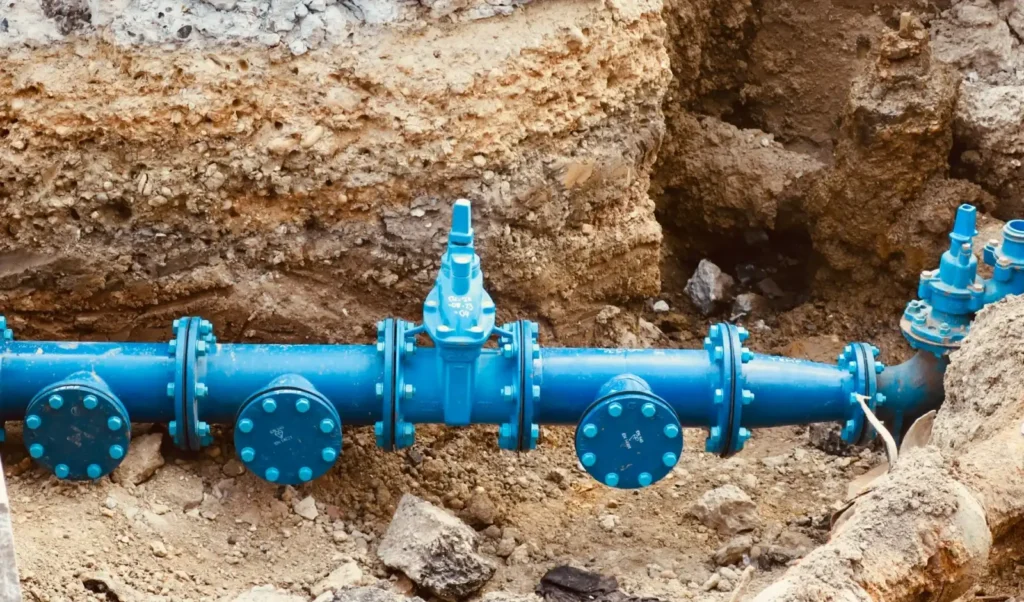
How we apply tension to a joint
The coverage and number of passes are chosen from joint size, gasket type and how critical the service is.
100% simultaneous tensioning
A tensioner on every stud, all pressurized together from one pump. The most even load, used on the most critical joints.
50% coverage, two passes
Tensioners on every second stud, then moved to the rest, with a final pass on the first set to recover load loss.
Load transfer allowance
Some stretch is lost when the tool releases, so the applied pressure is raised by a calculated factor to reach the residual load.
Topside and subsea-style tools
Compact tools for tight flanges and tall tools for long studs, chosen from the joint drawings.
Foundation bolt tensioning
Anchor bolts on compressors, turbines and pumps loaded to the manufacturer values.
Verification
Final pass at check pressure; a nut that turns shows the joint had relaxed and is brought back up.
Tensioning or torquing?
| Factor | Bolt tensioning | Bolt torquing |
|---|---|---|
| How load is created | Stud stretched directly, nut run down | Nut turned against friction |
| Effect of friction | Small | Large; depends on lubricant and threads |
| Studs loaded at once | Several or all | Usually one at a time |
| Stud length needed | Extra length above the nut for the tool | Standard length |
| Typical joints | Large, high-pressure, critical service | Most process flanges and equipment |
Our bolt tensioning process
Each tensioning job follows the same documented steps.
Survey the joint
We confirm stud size, thread, length above the nut, clearance around the flange and the gasket type.
Calculate pressures
Target residual load is converted to pump pressure, with the load transfer factor, and issued for approval.
Prepare studs and nuts
Threads are cleaned and checked, damaged studs replaced and nuts run down to the gasket.
Fit and pressurize
Tensioners are fitted at the chosen coverage and brought up to pressure together.
Run down and repeat
Nuts are run down at pressure, the tools released, and passes repeated as planned.
Verify and record
A check pass confirms the load, the joint is tagged and its record handed over.
Where bolt tensioning is used in Saudi Arabia
Joints where even load matters more than speed.
High-pressure gas joints
Gas plant and GOSP flanges, including RTJ joints, where uneven load causes leaks.
Heat exchanger girth flanges
Large shell and channel joints with many studs.
Reactors and columns
Large nozzle and body flanges in refineries and petrochemical plants.
Steam and power plant joints
High-temperature steam lines and turbine casing joints.
Pipelines and manifolds
Large-bore mainline flanges, launchers and receivers.
Rotating equipment foundations
Anchor bolts on compressors, turbines and large pumps.
Services that go with tensioning
Tensioning is usually one step in opening, repairing and closing a joint.
Bolt Torquing
Hydraulic torque wrenches and stud tensioners applying a calculated bolt load, pass by pass, with a tagged record for each joint.
View bolt torquingFlange Management
Joint registers, bolt load calculations, tagging and records for every flange in a shutdown.
View flange managementFlange Facing
On-site machining that restores flange sealing faces to the right finish and flatness, without removing the pipe.
View flange facingSeized Nut Removal
Hydraulic nut splitters and controlled break-out for corroded fasteners, without heat.
View seized nut removalBolting Tool Rental
Calibrated torque wrenches, tensioners and pumps for hire, with or without an operator.
View bolting tool rentalPneumatic & Helium Leak Testing
Pneumatic strength tests and helium tracer-gas leak detection for tight systems.
View pneumatic & helium leak testingBolt tensioning crews across Saudi Arabia
Our crews and equipment travel to plants and project sites in every region of the Kingdom.
Bolt tensioning services in KSA: common questions
When is bolt tensioning better than torquing?
For large studs, high-pressure or high-temperature service, joints with many studs that must be loaded evenly, and places where a torque wrench cannot reach. For most standard process flanges, torquing is still the practical choice.
Do my studs need to be longer for tensioning?
Usually yes. The tool needs about one stud diameter of thread above the nut to grip. We check stud length during the survey and can supply longer studs if needed.
What is load transfer loss?
When the tensioner releases, the nut and threads settle slightly and some stretch is lost. We raise the applied pressure by a calculated factor so the remaining load meets the target.
Can you tension and torque on the same job?
Yes. Most shutdowns have a mix of joints. We tension the ones that need it and torque the rest, with one record format for all.
Have joints that need tensioning?
Send the flange sizes, stud sizes and lengths, and the location. We will confirm the tensioners, crew and price.
- Phone+966 50 605 8927
- Emailalviqaisar@gmail.com
- BaseEastern Province, Kingdom of Saudi Arabia
- HoursOffice Sunday to Thursday, 7 AM to 5 PM. Field call-outs any day, any hour.