Hydrotest Services in KSA, from Test Pack to Sign-Off
A hydrotest proves that piping, welds and bolted joints can hold pressure before anything hazardous goes inside. We prepare the system, fill and pressurise it under control, hold and record the test, then drain and dry it ready for service.
Proving strength and tightness with water
Water is used for pressure testing because it hardly compresses. If a weld or fitting fails during a hydrotest, the pressure falls almost at once and very little stored energy is released, which makes it far safer than testing with gas at the same pressure. A successful test shows that the system is strong enough and that its welds, fittings and joints do not leak.
Our hydrotest services in KSA cover the whole sequence. We work from your test packs, install test blinds and vents, fill and vent the system, raise the pressure in stages to the value the governing code requires, hold it while the system is inspected, and record the result on calibrated instruments. The test is then witnessed and signed off with your inspector.
Because temporary blinds and gaskets are part of every test, our bolt torquing crews install and remove them, and tighten the permanent joints afterwards. When the system must be dry, nitrogen drying follows the drain-down.
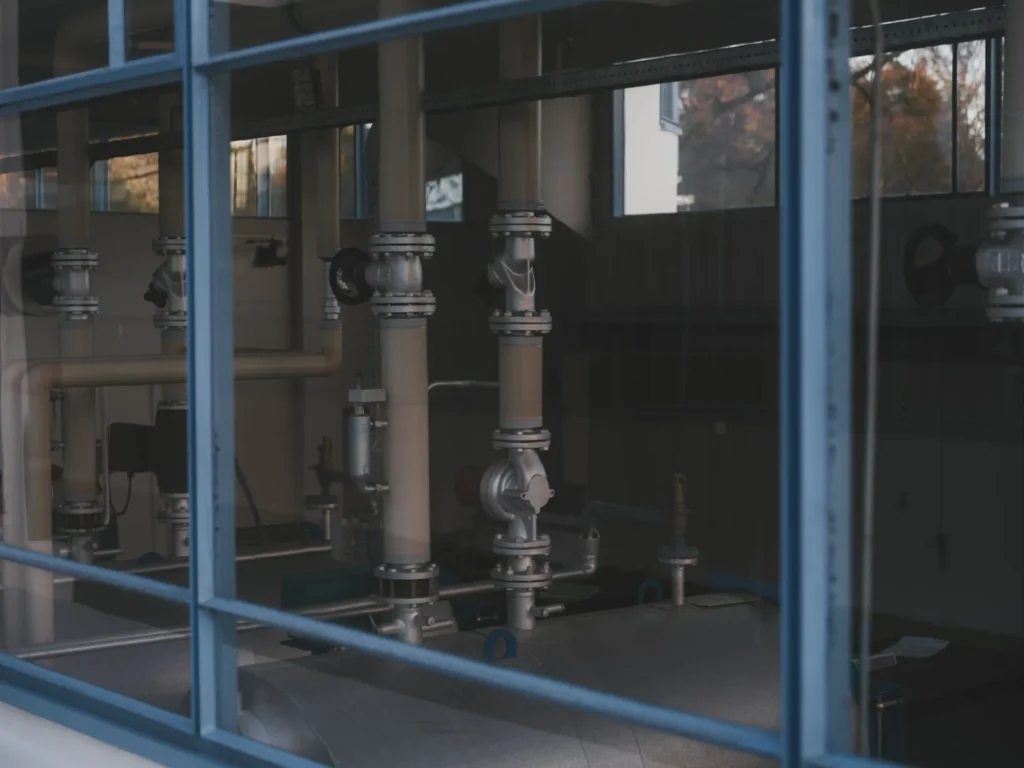
Everything needed to run the test safely
The kit is sized to the system volume, test pressure and how quickly it must be filled and drained.
Filling pumps
High-volume pumps fill the system quickly while vents at high points let the air out.
Pressure test pumps
Air-driven or electric test pumps bring the system up to test pressure in controlled steps.
Calibrated instruments
At least two calibrated gauges and a chart or digital recorder record pressure through the hold period.
Relief protection
A relief valve set above test pressure protects the system from accidental over-pressurisation.
Test blinds and gaskets
Temporary blinds isolate equipment that must not see test pressure, installed and bolted by our crews.
Drying and dewatering
Pigging, air blowing or dry nitrogen remove water after the test where the service requires it.
Hydrotest versus pneumatic testing
| Factor | Hydrostatic test | Pneumatic test |
|---|---|---|
| Test medium | Water, with additives if needed | Air or nitrogen |
| Stored energy | Low, because water hardly compresses | High; a failure can release energy violently |
| Typical use | The default for most piping and pipelines | Where water cannot be used or tolerated |
| Safety controls | Exclusion zone and controlled pressurising | Larger exclusion zone and stricter controls |
| After the test | Draining and, if needed, drying | Depressurising only |
The hydrotest sequence
Each test follows the approved test pack and the site permit system.
Review the test pack
We check the test boundaries, test pressure, hold time and equipment to be isolated or removed.
Prepare the system
Blinds are installed, sensitive items removed, vents and drains fitted, and supports checked for the weight of water.
Fill and vent
The system is filled from the lowest point and vented at the highest until all air is removed.
Pressurise in stages
Pressure is raised in steps with checks at each stage before reaching the full test pressure.
Hold and inspect
Pressure is held for the required time while joints and welds are inspected and the recorder logs the result.
Drain and reinstate
The system is depressurised, drained and dried if needed, blinds are removed and permanent joints are reinstated.
Where our hydrotest services are used
New construction, modifications and repairs across the oil, gas, petrochemical and utility sectors.
New plant construction
Testing process and utility piping systems as test packs are completed during pre-commissioning.
Pipelines
Section testing of new or repaired pipelines, with filling, testing and dewatering.
Modifications and tie-ins
Testing new spools and tie-in welds before they are connected to the live system.
Pressure vessels and drums
Testing after repairs or alterations, with the vessel isolated from connected piping.
Fabricated spools
Shop or yard testing of spools before shipment to site.
Valves and fittings
Shell and seat testing of valves after overhaul.
Services that support hydrotesting
A test is only as good as the joints in it. These services usually come before or after the test.
Bolt Torquing Services in KSA
Hydraulic torque wrenches and stud tensioners applying a calculated bolt load, pass by pass, with a tagged record for each joint.
Bolt torquing overviewPipe Cold Cutting Services in KSA
Spark-free clamshell and split-frame cutting and bevelling for live plants where hot work is not allowed.
View pipe cold cuttingFlange Facing Services in KSA
On-site machining that restores flange sealing faces to the right finish and flatness, without removing the pipe.
View flange facingNitrogen Purging Services in KSA
Inerting, oxygen-free purging, drying and nitrogen leak testing before start-up or after maintenance.
View nitrogen purgingHydrotest crews across Saudi Arabia
Our test crews and equipment work on construction and maintenance sites in every region.
- Hydrotest in Jubail
- Hydrotest in Ras Tanura
- Hydrotest in Dammam
- Hydrotest in Al Khobar
- Hydrotest in Dhahran
- Hydrotest in Abqaiq
- Hydrotest in Ras Al Khair
- Hydrotest in Al Ahsa
- Hydrotest in Qatif
- Hydrotest in Khafji
- Hydrotest in Haradh
- Hydrotest in Riyadh
- Hydrotest in Al Kharj
- Hydrotest in Qassim
- Hydrotest in Hail
- Hydrotest in Jeddah
- Hydrotest in Yanbu
- Hydrotest in Rabigh
- Hydrotest in Makkah
- Hydrotest in Madinah
- Hydrotest in Taif
- Hydrotest in Jazan
- Hydrotest in Abha
- Hydrotest in Najran
- Hydrotest in Tabuk
- Hydrotest in NEOM
Hydrotest services in KSA: common questions
What test pressure do you use?
The test pressure is set by the code that governs the system and by the design conditions. For process piping it is usually a multiple of the design pressure, adjusted for temperature. The value comes from your approved test pack.
How long is the pressure held?
The hold time depends on the code and your specification. It is long enough for every joint and weld within the test boundary to be inspected, and the pressure is recorded throughout.
Can you test stainless steel systems?
Yes. For stainless steel we control water quality, particularly chloride content, and drain and dry the system promptly after the test to avoid corrosion.
Do you provide the test water?
We can arrange suitable water and treatment where required, or use a supply provided by the site. Water quality is checked against the project specification.
Do you remove the test blinds afterwards?
Yes. Our bolting crews remove the temporary blinds and gaskets and reinstate the permanent joints, tightened to a calculated load.
Have test packs ready to go?
Send the test pack list, test pressures, system volumes and location. We will reply with crew, equipment and a price.
- Phone+966 50 605 8927
- Emailalviqaisar@gmail.com
- BaseEastern Province, Kingdom of Saudi Arabia
- HoursOffice Sunday to Thursday, 7 AM to 5 PM. Field call-outs any day, any hour.